'Wir lernen Deutsch, OK?!': Kevin Yount (YP, '96-'97) reflects on ambiguity and learning to be ok with it
It was dad's idea, at the beginning. I was an incoming freshman at Clemson University the summer of 1990 and we were on campus signing up for classes. On one of those long, hot walks between buildings he told me I ought to take a foreign language. As an engineering student it wasn't required so I was hesitant to the idea. I'd just finished four years of high school Latin and I wanted to put that part of my brain on sabbatical a while longer.
I'm not quite sure why I eventually selected German as an interest, but somewhere in the next year or two I decided to take a course at Salem College while home for the summer. Maybe it was meeting a couple of bright co-eds along the way, who raved about their experience abroad. Regardless, after enjoying Dr. Steiner's class in the summer of '92, and then Uli Froehlich's summer abroad in Wuerzburg the following year, I was hooked and I wanted more. My first application to the Congress-Bundestag Youth Exchange program was rejected. College graduation came and went and I still wanted more. Doubling down, I poured myself into the second application, got selected, and then made plans to up-root myself from kith and kin.
Leaving in July '96 was hard. Arriving yet harder. For someone with barely two semesters of instruction, the immersion felt like jumping in an icy lake in January. Communication difficulties was one part of the equation but paired with cultural and lifestyle changes—it was a lot to absorb. Where is my car when I need it? Why do I have to share this bathroom with 3 complete strangers? How long do I have to stand in this line? Why is nothing open today?

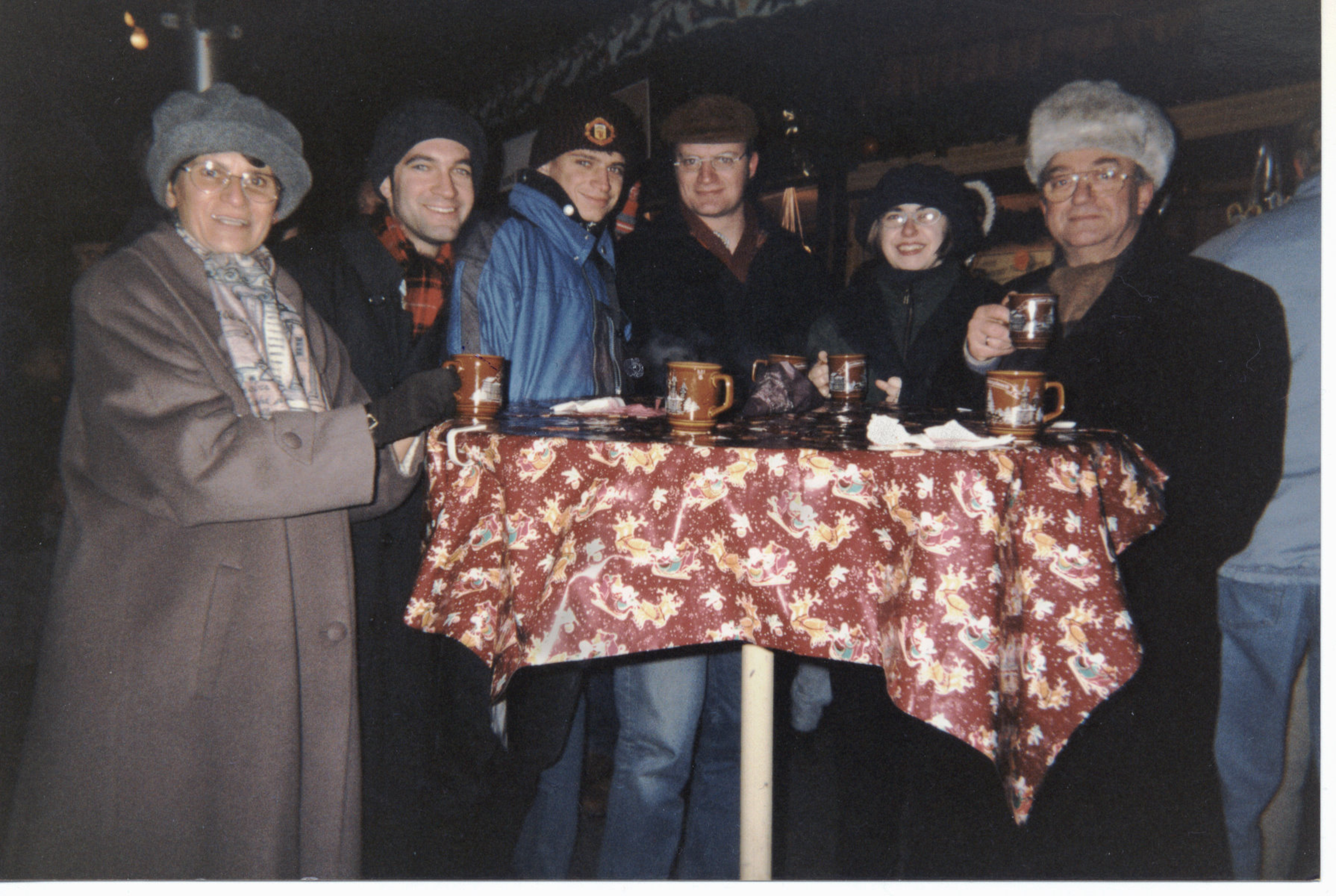
The thing about struggles of course, is that you learn from them. Sometimes you learn you don't want that particular struggle anymore. But often you learn that the struggle eases after several tries, and fades away. There's a sense of pride & confidence that comes with that. One night, sitting in a bar with two other foreign students, we found ourselves struggling to have a conversation together, in a public setting, in a language that wasn't our own. Noticing the odd, sideways glance from nearby patrons, my frustration bubbled to the surface and I announced loudly "Wir lernen Deutsch, OK?" I try to remind myself of that moment whenever I struggle with something new: it's OK to be learning. It looks and feels messy, but it's OK.
The vast majority of my struggles with that foreign culture are now positive memories. Maddening as German pronunciation and diction can be, I have fond remembrances of unique idioms, rigidly-direct vocabulary and direct-translation gaffs. The mother of my host mother was adamant that I learn to correctly pronounce and know the difference between schwül and schwul. When asked by the stylist at the local barbershop what kind of haircut I wanted, she giggled uncontrollably when I requested a 'Ceasar-cut' (a "Kaiserschnitt" being a cesarean section).
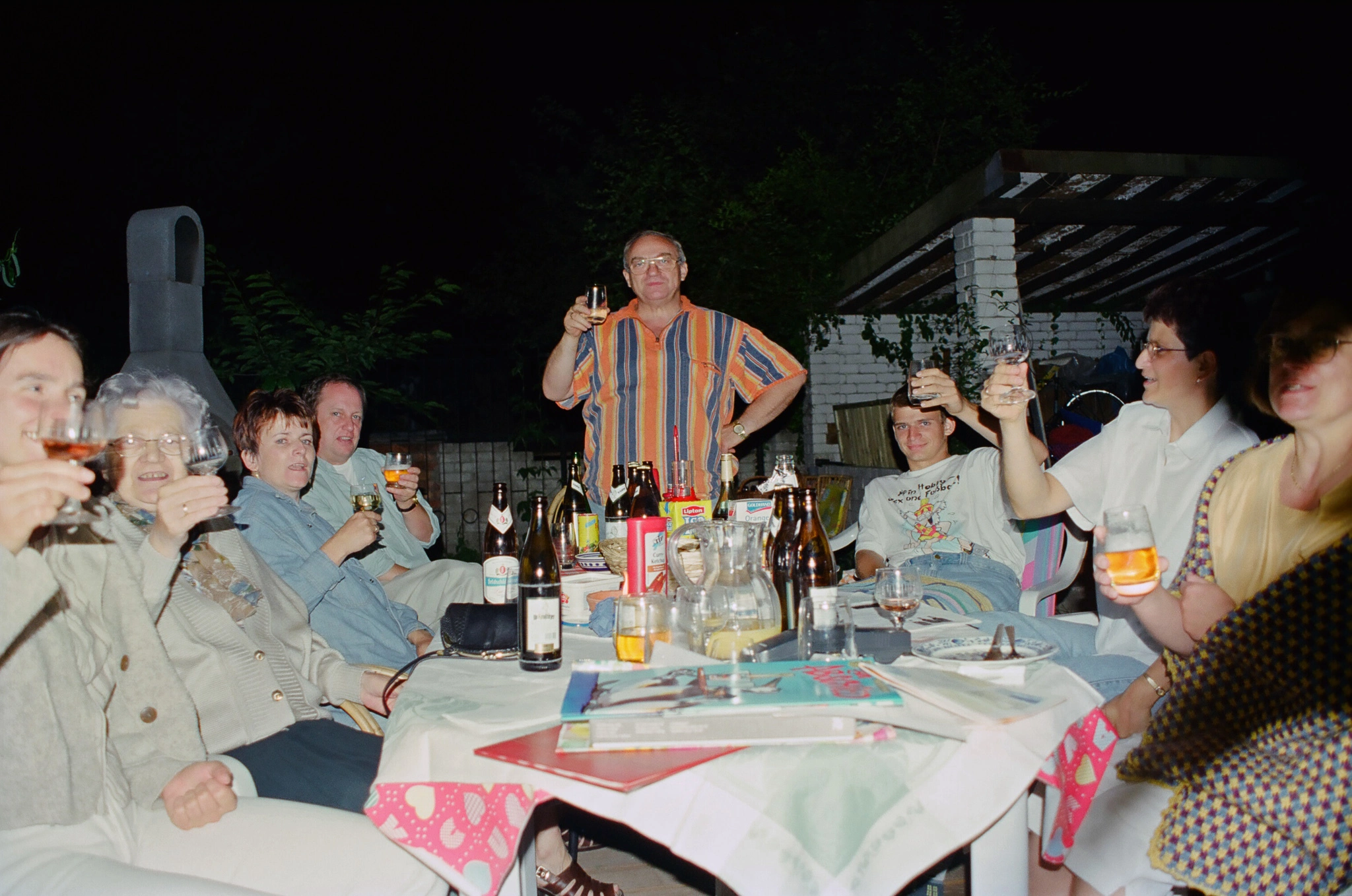
And for those individuals who struggled alongside with you, you develop a unique bond. Twenty-five years later the bonds are naturally a bit frayed, but the thought of these compatriots, the joys and struggles we shared brings strong, positive emotions. Twenty-five years of change also illuminates the hard truth of our transient nature here, and the sometimes painful process of witnessing that change and ultimately letting go.
My experience abroad was ultimately, an overwhelmingly positive, and to some degree, transformative experience. My host family was a gem - I hit the lottery in Dresden. After figuring out how to pronounce them, I became addicted to the endless variety of pastries and pork products I encountered. My interest and love for the culture deepened that year, but it doesn't happen universally. "Your experience may vary" is a severely accurate truth, when living abroad.
Beyond those bonds, beyond your personal growth, and beyond your new relationship with another culture, what's in it for your own country? This isn't clear or immediate, and the efficacy of these benefits only comes with individual evangelism, of which I'm not certain I've done enough justice to. For the record, I developed a deeper empathy for anyone that chooses to willingly leave their native culture and enter a new one. And I learned how our government's words and deeds have a direct effect on the perception of us a people - both good and bad. These insights came as a slow realization over time, that your lens on the world is somewhat different. The real value of these programs for our nation manifest when we serve as witnesses to these insights, and tell these stories. Thank you for reading this one.